
Padel is famously easy to pick up. Most people are rallying within their first hour. The rules, though, can feel odd if you’ve come from tennis or squash. Why does the serve go underhand? When can you let the ball hit the glass? What on earth is a golden point?
This guide explains the rules the way you’ll actually meet them on court, based on the International Padel Federation (FIP) rulebook. It covers the court, the serve, the walls, the scoring (including the new star point) and the faults that catch beginners out.
Padel is a doubles racket sport played on an enclosed court of 20m × 10m. You serve underhand, bouncing the ball first and hitting it at or below waist height, diagonally into the opposite service box. The ball must bounce once on the opponents’ side before it touches their walls. After that bounce it can come off the glass and still be played. Scoring is the same as tennis (15, 30, 40, game), and at 40-40 many matches use a single deciding golden point.
The court and equipment
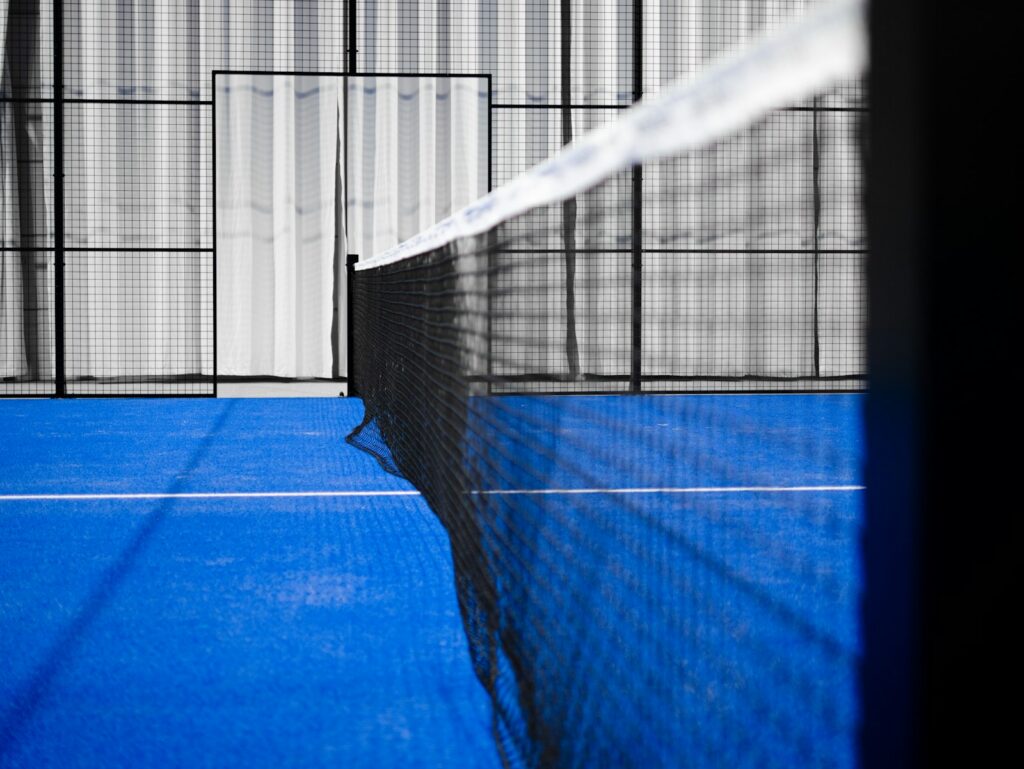
A padel court is a rectangle of 10m wide by 20m long, measured inside the enclosure, split in half by a net. The net is 88cm high in the centre and 92cm at the posts, a touch lower than tennis. The court is enclosed by walls, usually glass at each end and part of the sides, with metal mesh fencing making up the rest. Those walls are part of the game, which is what makes padel feel like a mix of tennis and squash.
On each side, a service line runs parallel to the net, and a centre line divides the area between the net and the service line into two service boxes.
| Element | Official measurement |
|---|---|
| Playing area | 20m long × 10m wide |
| Net height | 0.88m at centre, 0.92m at the posts |
| Racket length | Max 45.5cm |
| Racket head width | Max 26cm |
| Racket thickness | Max 38mm |
| Wrist cord | Compulsory, max 35cm |
Rackets are solid (no strings), with a perforated face and a compulsory wrist strap. Wear it every time, because a racket flying into glass or a partner’s head is a real risk. Balls look like tennis balls but run at a slightly lower pressure, which keeps rallies controlled inside the enclosure.

How to serve in padel
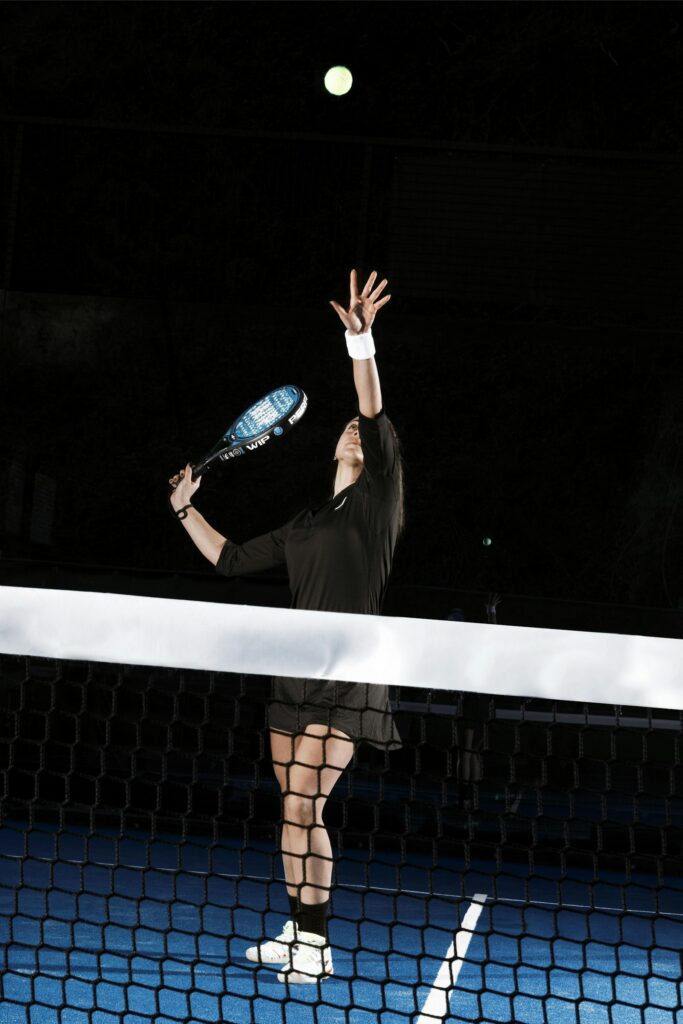
The serve is the rule that surprises new players most, because it’s nothing like a tennis serve. To serve legally:
- Stand behind the service line, between the centre line and the side wall, on the correct side (you start on the right).
- Bounce the ball on the ground behind the service line, inside your serving area.
- Hit it at or below waist height, with at least one foot on the ground.
- Send it diagonally over the net into the opponents’ service box. You can’t touch the service line or centre line with your feet before you make contact.
After a correct bounce in the box, the serve can hit the glass and stay in play. If it hits the metal fence before bouncing a second time, it’s a fault. You get two serves, just like tennis, and you alternate sides after each point.
Returning serve
The receiver must let the serve bounce in the service box and return it before it bounces a second time. You can’t volley a serve. That’s why you’ll see receivers standing deep near the back glass. The pair that receives first chooses who takes which side, and that order stays fixed for the whole set.
The walls: what’s legal and what isn’t
The walls are where padel gets interesting, and they’re behind most beginner confusion. The golden rule: the ball must bounce on the ground before it hits a wall on the side it’s travelling to. Once it has bounced, the walls are fair game.
| Situation | Legal? |
|---|---|
| Ball bounces on your side, hits your back or side glass, and you return it | ✅ Yes |
| You hit the ball against your own wall and it goes over the net directly | ✅ Yes |
| Your shot bounces on the opponents’ side, then hits their glass or fence | ✅ Yes (they must deal with it) |
| Your shot hits the opponents’ wall or fence before bouncing | ❌ No, your point is lost |
| You let the ball bounce twice on your side | ❌ No, point lost |
| The ball bounces on your side then leaves the court (via a door or over the wall) | Legal for the hitter; the defenders may chase it outside only if the venue and competition allow it |
The most useful tactical tip for beginners is to let the ball come off the back glass rather than panicking and swinging early. The glass gives you time, and learning to read the rebound is the biggest early jump in level.
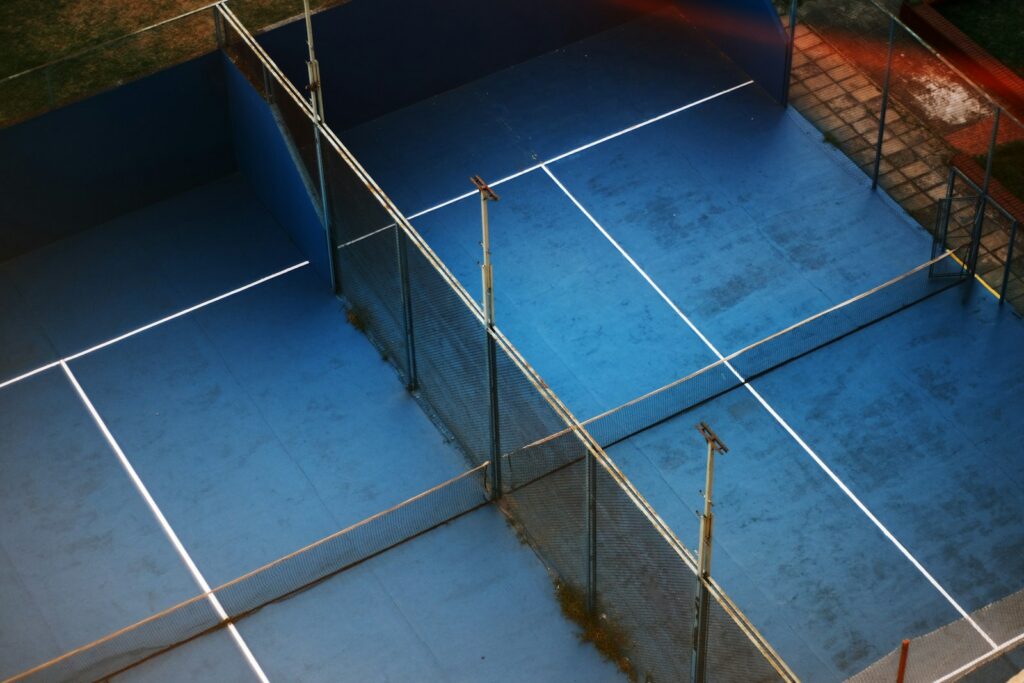
Advanced players also “play outside”: they chase balls that leave the court through the open doors. The FIP rules only allow this when the court’s safety areas and the competition or club rules permit it, so check before you sprint out.
How padel scoring works
If you know tennis scoring, you already know padel scoring:
- Points: 0 (love), 15, 30, 40, game.
- Games: the first to six games wins the set, but you must lead by two (6-4, 7-5).
- Tiebreak: at 6-6, a tiebreak is played to seven points, again by a margin of two. Serve rotates every two points and ends change every six points.
- Match: usually best of three sets. Many leagues replace the third set with a 10-point match tiebreak to keep matches to a predictable length. The Bear Digital Cup Series plays a 10-point tiebreak at the end of every match: at one set all it decides the winner, and it always earns its winner a bonus point.
The part that varies is what happens at 40-40 (deuce). That’s where golden point and star point come in.
Golden point vs star point
The FIP rules allow three ways to settle a deuce. The format must be agreed before the match starts.
| Format | How it works | Where you’ll see it |
|---|---|---|
| Advantage | Traditional tennis style: you must win two points in a row from deuce. Games can go on for a long time. | Casual and social play |
| Golden point | At the first 40-40, a single deciding point is played. Whoever wins it wins the game. | Most clubs, amateur tournaments and leagues, including the Cup Series |
| Star point | Two normal advantages are played. If the score returns to deuce a third time, one deciding “star point” is played. | FIP professional events since 2026 |
The star point is new. The FIP adopted it at its General Meeting in November 2025, and it was introduced in professional padel from January 2026. It’s a middle ground between endless advantages and the sudden-death golden point. It is not compulsory for club players, and most social and league padel in South Africa still uses the golden point because it keeps matches moving.
Faults and ways to lose a point
Apart from the ball bouncing twice or going out, you lose the point if you or your partner:
- Touch the net, or step into the opponents’ court, while the ball is in play
- Hit the ball twice, or both partners hit the same ball
- Get hit by the ball (anywhere on your body or clothing) before it bounces, even if you’re standing outside the court
- Hit a shot that strikes the opponents’ wall or fence before bouncing
- Volley the ball before it has crossed the net onto your side
- Hit a shot that bounces on your own side of the court before it crosses the net
One situation catches many players out. If a smash with heavy spin bounces on the opponents’ side and spins back over the net, the opponents can still play it, but they mustn’t touch the net or step into the other court to do so. If they can’t reach it, the point goes to the player who hit the smash.
Padel vs tennis: key differences
| Padel | Tennis | |
|---|---|---|
| Format | Almost always doubles | Singles or doubles |
| Court | 20m × 10m, enclosed by walls | 23.77m × 10.97m (doubles), open |
| Serve | Underhand, at or below waist, after a bounce | Overhead, no bounce |
| Walls | Part of play after the bounce | Not used |
| Racket | Solid, stringless, max 45.5cm | Strung, up to 73.7cm |
| Scoring | Tennis scoring; golden point common at deuce | Tennis scoring with advantages |
| Learning curve | Rallies within the first session | Takes longer to sustain rallies |
Because the court is smaller and the walls keep the ball in play, padel rewards positioning, patience and teamwork more than raw power. That’s also why it’s so social, and why club leagues like ours have taken off. See how the Bear Digital Cup Series started.

Beginner mistakes to avoid
- Hitting too hard from the back. Big hits usually bounce off the back glass and sit up for your opponents. Lobs and controlled balls win more points.
- Playing the ball before the glass. Give yourself time: let it rebound, then play it.
- Standing still at the back. The best position is at the net. Pairs who get forward together win most points.
- Forgetting your partner. Move as a pair, call “mine” and “yours”, and cover the middle together.
- Serving too fast. A consistent, deep serve into the box beats a risky fast one. Remember that the fence is a fault.
How the rules work in a league
Competitive formats layer their own rules on top of the FIP basics. In the Bear Digital Cup Series, for example, matches are two sets with golden point and a 10-point tiebreak at the end of every match (worth a bonus point), and there are no substitutions: the pair a club selects from its squad of up to four plays the whole match, unless a registered reserve replaces an injured player. You can read the full competition rules on our official league rules page, or get the plain-English version in our complete league guide. To see which competitive level suits you, check the six divisions.
Cape Town’s club league kicks off on 6 February 2027. Find out how clubs select their squads, and how to put yourself forward.
Frequently asked questions
What are the basic rules of padel?
Padel is played in doubles on a 20m × 10m enclosed court. You serve underhand, diagonally into the opposite box. The ball must bounce once on the opponents’ side before hitting their walls, and after that bounce it can come off the glass and still be played. Scoring follows tennis: 15, 30, 40, game.
Do you serve underhand in padel?
Yes. In padel you bounce the ball behind the service line and hit it at or below waist height, with at least one foot on the ground. The serve must land diagonally in the opponents’ service box. You get two attempts, as in tennis.
Can the ball hit the wall in padel?
Yes, as long as it bounces on the ground first. After the ball bounces on your side, it can hit your glass or fence and you can still return it. Your shot must not hit the opponents’ walls before bouncing on their side.
Can a padel serve hit the fence?
No. After bouncing in the correct service box, a serve may hit the glass and stay in play, but if it hits the metal fence before its second bounce, it’s a fault.
What is the golden point in padel?
The golden point is a scoring rule used at 40-40. Instead of playing advantages, a single deciding point is played, and whoever wins it wins the game. The receiving pair chooses which player receives the golden point.
What is the star point in padel?
The star point is a scoring format introduced by the FIP for professional padel from 2026. At deuce, two advantages are played normally. If the game reaches deuce a third time, one deciding star point is played. It’s optional for club players.
Can you volley the serve in padel?
No. The receiver must let the serve bounce inside the service box before returning it. After the return, volleys are allowed for the rest of the rally.
Is padel easier than tennis?
Most beginners find padel easier to start. The court is smaller, the serve is underhand and the walls keep rallies going, so people usually enjoy proper points in their first session. Playing it well at a high level still takes years of practice.